Getting to the Source… and Getting the Source Right
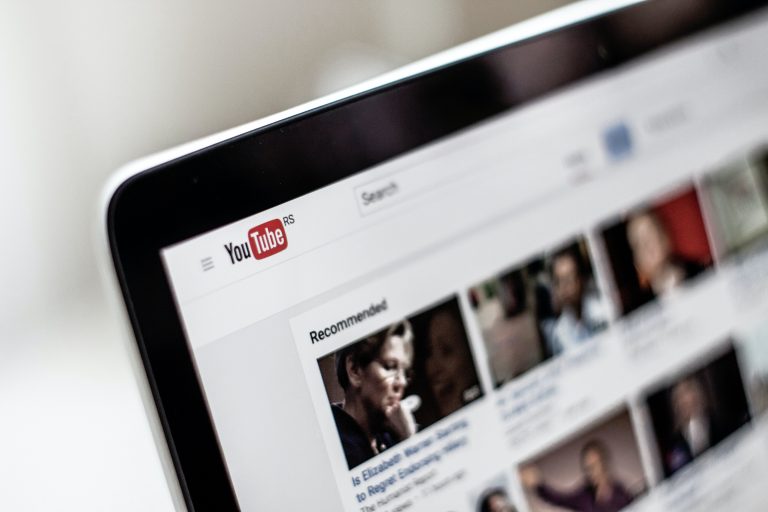
In today’s day and age, one adage has become more important than ever: Don’t believe everything you read—or watch or listen to—on the internet. Not to say that you can’t believe anything you read on the internet. The internet has allowed for knowledge to be dispersed far and wide, and often for free, and much of it is credible, informative, and valuable. It is also now available in a wider range of formats; written sources are no longer the only way to learn. Consider the rise of podcasts and videos that break down and share longer information that would be harder to parse through in an article on the web. However, the key for any source—written or otherwise—is to determine whether something is credible.
Here are a few questions you should ask yourself.
The What, Who, and Whys of Source Evaluation
What Are You Looking At?
Before you can evaluate an information source, it’s important to recognize what it is you’re actually looking at. Is this a primary source, shared by someone with a first-hand account of the subject? Or is it a secondary source, produced after the fact and often based off first-hand knowledge? Is this a scholarly source, defined by thorough research and often targeted at fellow scholars? Or is it a popular source, produced for a wider, less informed audience looking for a basic understanding on a subject?
None of these sources are inherently less valid, valuable, or credible than another; they merely serve different purposes.
Who Produced It?
Evaluating a source would not be complete without evaluating the person who provided it. An article written about the biological processes of manta rays may have more credibility when written by a marine biologist compared to an article written by a layman on the internet. Determining the education and experience that informs a source-provider is a crucial step to evaluating the credibility of the source itself.
This isn’t to say that valuable and credible information can’t be found in material produced by a layman, but it does necessitate a close evaluation of the sources they, themselves, are using.
Who Was It Produced For?
When evaluating who it is produced for, you must also ask the question: what do I need to learn? While it might be tempting to consider scholarly research as the best source to turn to, it may not always actually fulfill the needs of your research. Popular sources that break down the information you need in layman terms may, in fact, be exactly what you need. Popular sources based off deeper or more intensive scholarly articles or simplified by a credible expert can be your best friend.
Why Was It Produced?
Why was your source produced? There are two main reasons most sources are created: To educate and to persuade. Understanding why a source was produced is essential to determining credibility, many propaganda pieces try to present themselves as purely educational, attempting to provide opinion and present it as fact. Ask yourself if a source is trying to move you to action and remember, not all propaganda is inherently bad. Failing to recognize propaganda, however, can be detrimental.
The How of Source Evaluation
Verify
When evaluating a source, one of the easiest, but most important ways to check for credibility is to see if you can find other sources verifying the information. Two sources are, in fact, better than one. When doing this, of course, ensure that the second source fulfills the base requirements of credibility. While the internet has enabled knowledge to be more readily shared and consumed, it has also made it easier for misinformation to make the rounds.
Utilize References
Your best friend when checking for credibility is to see where the information is coming from. The bibliography or reference list is a goldmine, both when searching to verify information you’ve already found and to get a wider range of perspectives and expand the scope of information you can find. It also gives you the peace of mind of knowing that your initial source has been well researched. Obviously not every source will have a reference list, so take advantage of it when there is one. Sometimes, what they cite is just as important as what they write.
Evaluate Timeliness
Timeliness is the question of when your source was published. Often, this is described as looking at the newest sources for the most accurate information, for instance, if you’re trying to determine the effects of tariffs on the global economy, looking at economic reports from 2012 are going to be less than helpful. However, newest isn’t always best. If you want to follow the trajectory of our understanding of the universe, you may want to both look at sources from different eras of scientific growth while also looking at a recent source discussing the timeline as seen now. Likewise, if you want to understand the effects of the Great Depression, primary sources from the 1930s might be where you want to focus your attention.
One last note: In the age of AI, it has become easier than ever to find information… and easier than ever to be tricked by misinformation. Evaluating your sources—or the sources that AI is providing you—is ever more essential if you want to ensure that you’re getting factual, credible, and valuable information.
The truth is out there on the internet… it’s just a matter of finding it!
Reference List:
Harvard College Writing Program. (2025). Evaluating sources. Usingsources.Fas.Harvard.Edu. https://usingsources.fas.harvard.edu/evaluating-sources-0
Purdue Writing Lab. (2018). Evaluating sources: Introduction. Purdue Writing Lab. https://owl.purdue.edu/owl/research_and_citation/conducting_research/evaluating_sources_of_information/index.html
Ryan, E. (2022, June 2). Evaluating sources | methods & examples. Scribbr. https://www.scribbr.com/working-with-sources/evaluating-sources/